

Media Release

INSEE PARTICIPATED AND PRESENTED AT THE OPTOCE WORKSHOP NAMED “FROM PILOT TO POLICY: ADDRESSING NON-RECYCLABLE PLASTIC WASTE THROUGH CO-PROCESSING IN THE CEMENT INDUSTRY”, ORGANIZED BY THE ROYAL NORWEGIAN EMBASSY AND SINTEF.


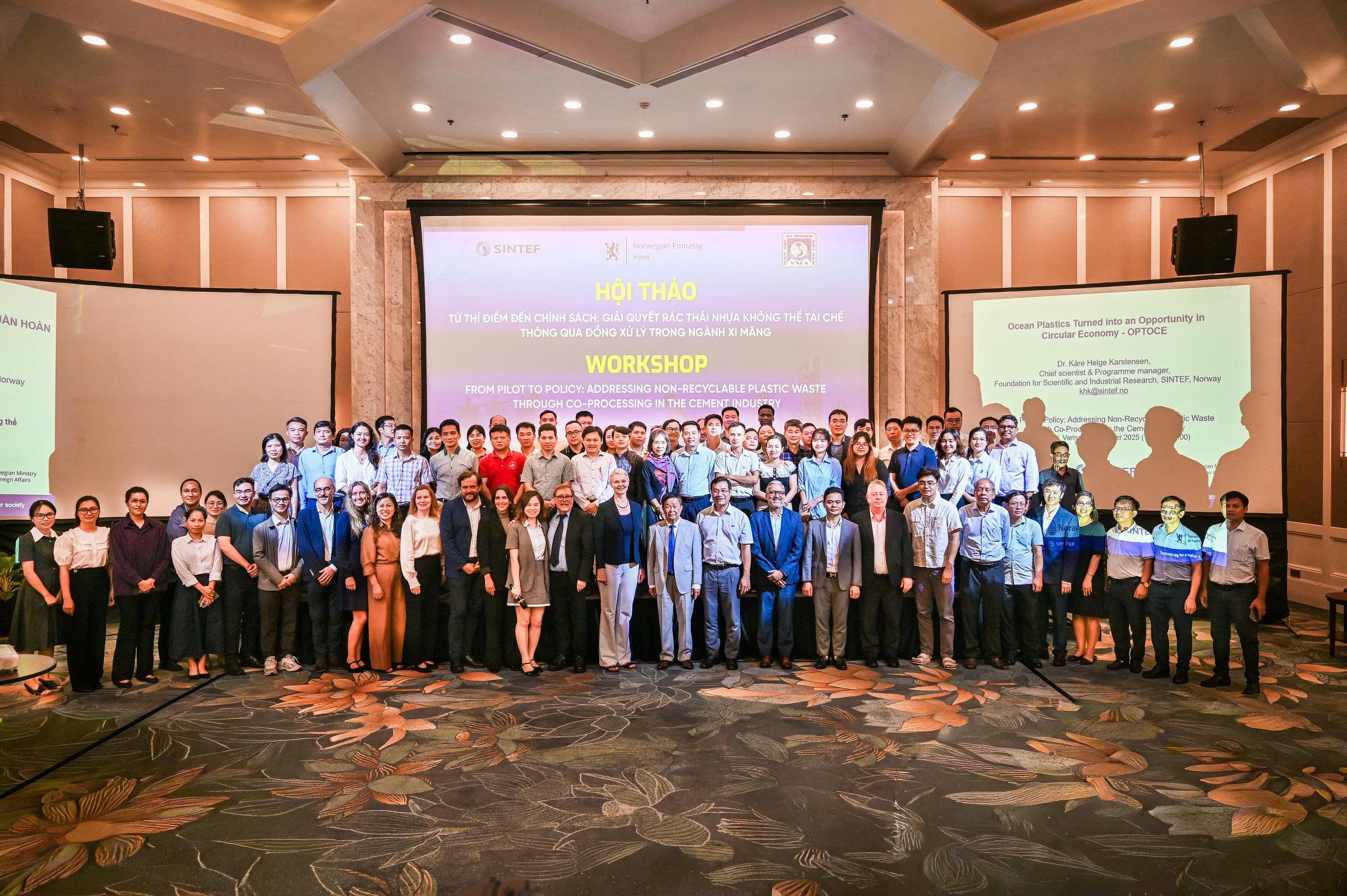
On October 3rd, INSEE Vietnam took part in the workshop “From Pilot to Policy: Addressing Non-Recyclable Plastic Waste through Co-processing in the Cement Industry”, jointly organized by SINTEF (Norway), the Royal Norwegian Embassy in Vietnam, and the Vietnam National Cement Association (VNCA) in Hanoi.
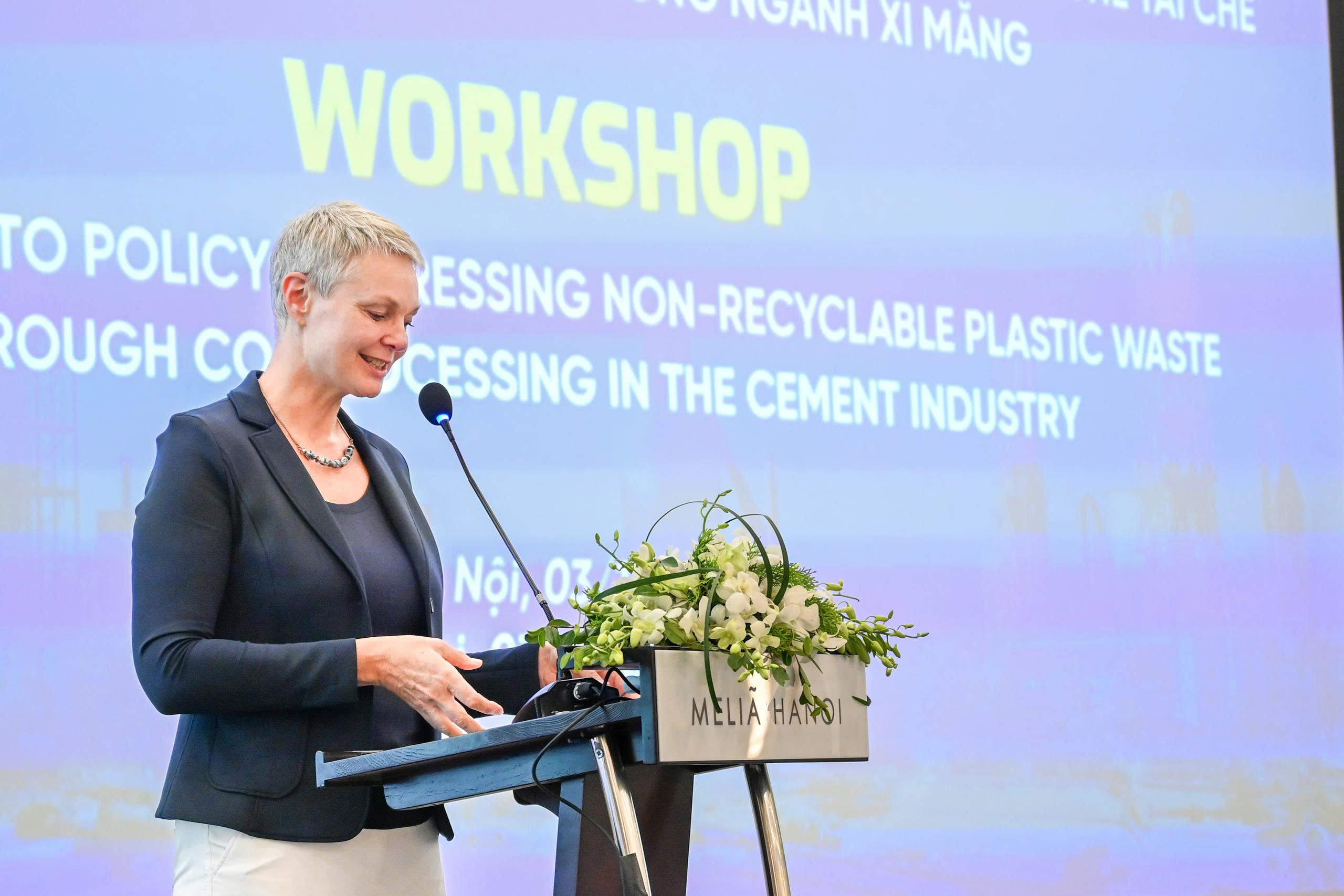
In the opening speech, Ms. Hilde Solbakken, Norwegian Ambassador in Vietnam, shared: “Through initiatives like OPTOCE, we aim to turn environmental challenges into opportunities — in this case, transforming low-value plastic waste into alternative fuel for cement production.” She also mentioned a study in India indicating that the cost of co-processing waste is approximately USD 25 per ton — less than half of the cost of traditional incineration (USD 62 per ton). This approach is considered faster and more cost-effective in reducing coal consumption, limiting plastic pollution, and protecting the environment.
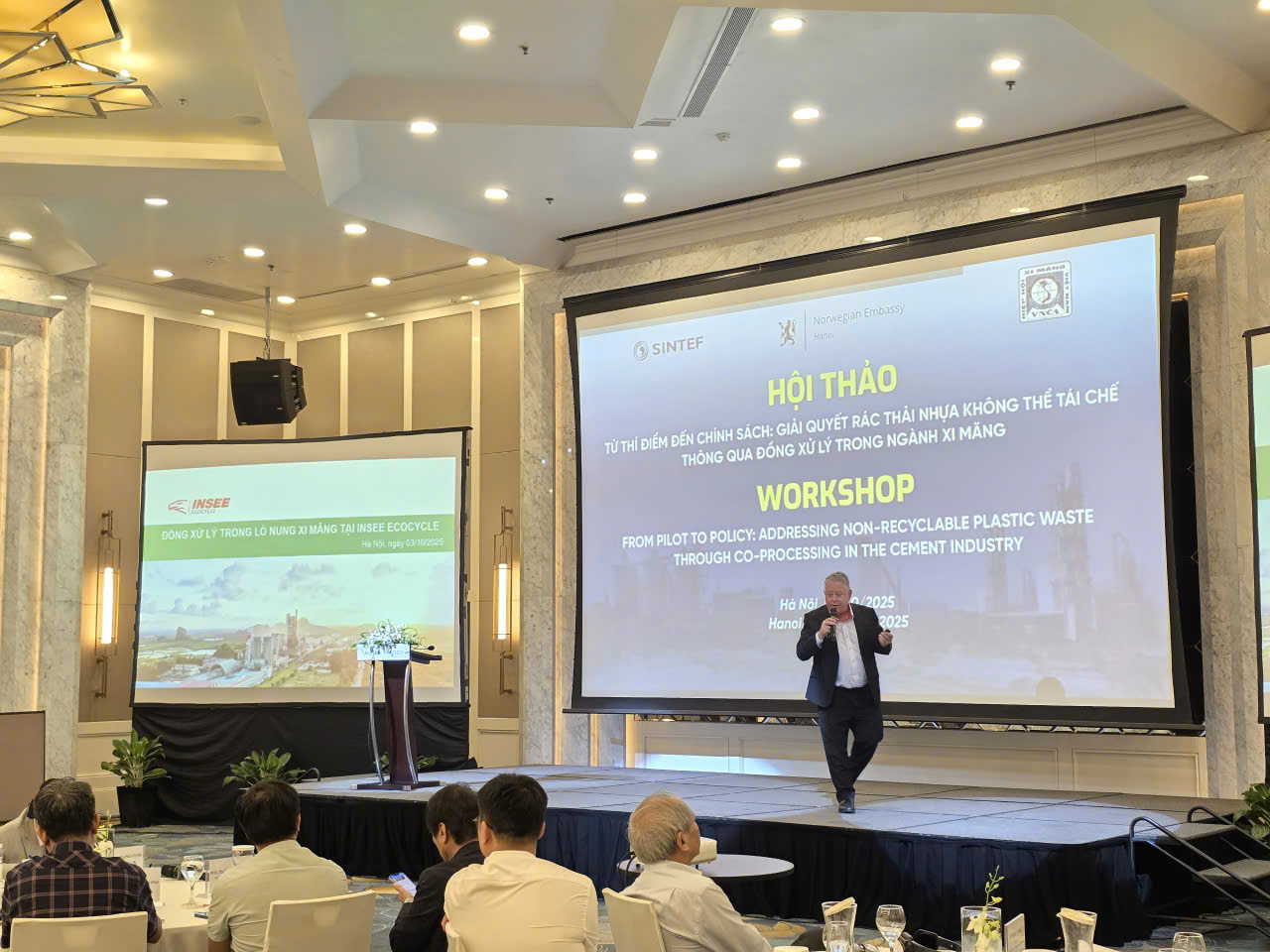
During the workshop, Mr. Eamon Ginley, General Director of INSEE Vietnam, delivered a presentation titled “Co-processing in Cement Kilns of INSEE Ecocycle.” He shared technical processes and infrastructure investments covering waste collection, pre-treatment, environmental control, laboratory systems, and INSEE Ecocycle’s practical experience in co-processing. He also discussed the opportunities and challenges related to this approach — such as the lack of subsidies for municipal solid waste treatment compared to other methods, the high costs caused by poor waste segregation at source, and the need for co-processing to be recognized under the Extended Producer Responsibility (EPR) mechanism, etc.
The OPTOCE Project, funded by the Norwegian Ministry of Foreign Affairs and implemented by SINTEF, has piloted the use of cement kilns as safe and efficient facilities for co-processing non-recyclable plastics. By replacing fossil fuels and reducing the amount of plastic waste sent to landfills or released into the environment, the OPTOCE Project has demonstrated that co-processing in cement kilns helps cut greenhouse gas emissions and improve resource efficiency.